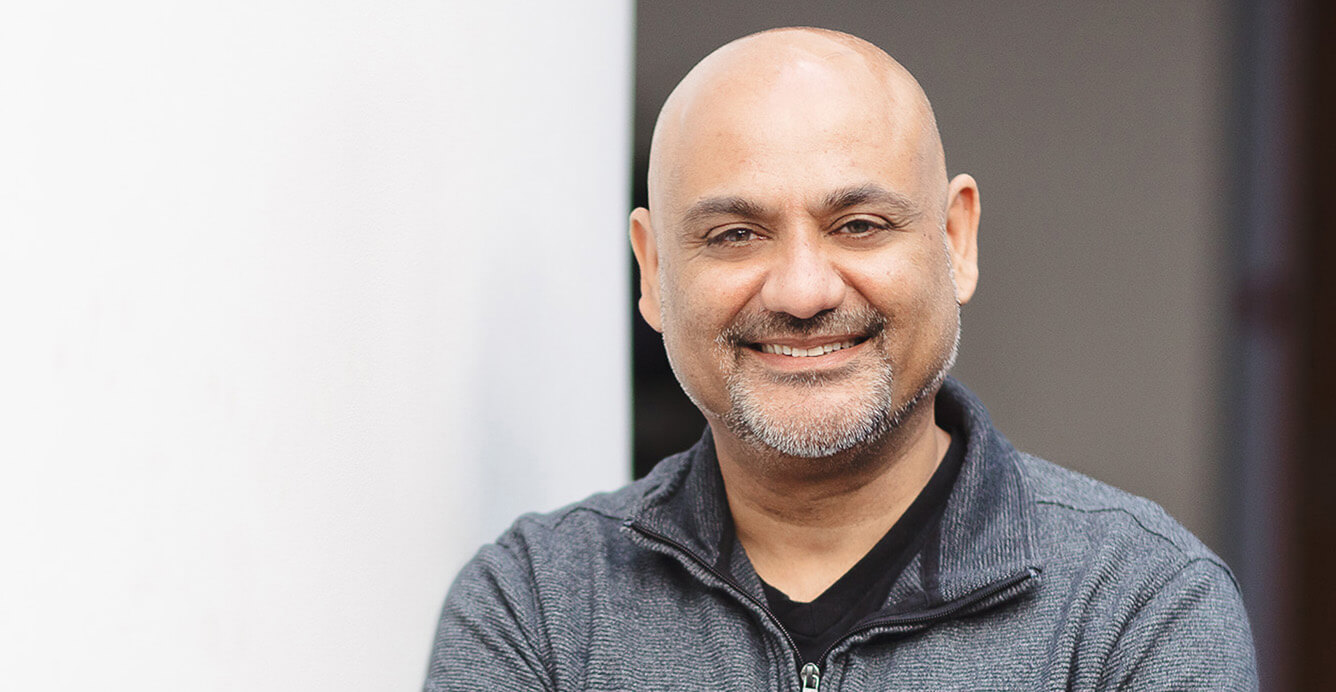
As a child, Syd Alam wanted to know what was inside his Radio Shack radio and how it worked. So, he took it apart. Clocks, speakers and, eventually, a VCR met the same fate. His father, a mechanical engineer, was not impressed when another piece of household technology ended up in parts.

Years later, Syd is still interested in how things work—only now the things are networks, organizations and products. His career has taken him from customer service and technical support through operations, engineering, architecture, cloud security, and product management.

In this interview, Syd reflects on the curiosity that shaped his career, what operators and vendors misunderstand about each other, and why he has never been interested in standing still.

You weren’t just curious about computers - you were taking apart anything you could get your hands on.

Pretty much. I was always the kid who wanted to open something up and see what was inside. Then I’d try to put it back together, although that part wasn’t always successful. That was usually when my dad got upset.

Computers became a big interest for me. I joke that I learned how they worked because I wanted to get my games running. Back then, you had to understand the hardware and the operating system well enough to get every bit of performance out of the machine. I started with the game but ended up learning about the technology behind it.

With an engineer for a father, did you always imagine following a similar path?

I always thought I’d become some kind of engineer. Later, though I studied programming and initially saw myself becoming a developer.

But once I got into it, I found the work not fully satisfying my curiosity. I was more interested in the bigger picture: how the systems fit together, what the customer needed, what the business was trying to achieve, and where the technology could take us. That broader view appealed to me much more.

I always thought I’d become some kind of engineer.

Telecom wasn’t exactly a childhood plan, though. How did you find your way into it?

The honest answer is that I needed a job.

Before Rogers, I had a paper route, worked in a grocery store and made pizzas at Domino’s. I could make a very good pizza – or at least I could back then.

Rogers was my first full-time job. I started in customer service and technical support, and it came naturally to me. Then I began seeing more of what happened behind the scenes, and that’s where telecom became genuinely interesting.

I moved into operations, then engineering, architecture, and eventually cloud security. Starting so close to the customer stayed with me. I knew what it felt like when something didn’t work, and I carried that into the systems I later helped implement and design.

You spent 22 years at Rogers, but it doesn’t sound as though you spent much time standing still.

Not really. Every few years, I moved into something different. I’d learn about an area, become comfortable with it and start looking for the next challenge. That’s what kept the industry interesting to me.

Was there anyone who particularly shaped the way you worked?

I had mentors who changed the way I approached the work. One director in particular helped me see that the technically correct answer isn’t always the whole answer. Other teams may be dealing with different risks, priorities, or business pressures.

I learned that you can be passionate about your position without losing sight of everyone else around the table. That has stayed with me.

The technically correct answer isn’t always the whole answer.

Having seen a large operator from the inside, what do vendors tend to misunderstand?

Mostly, how much is happening behind the scenes. A large operator has many teams, projects, personalities, and competing priorities. Something that looks like a small change from the outside may touch several parts of the organization. It might be urgent for one team and number 16 on the list for another.

Operators are also responsible for keeping essential services running. If the network goes down, the consequences are serious. That creates a culture of careful testing, accountability, and risk management.

A vendor may look at a request and think, “This is a small change. Why is it taking so long?” But inside the operator, someone’s name is attached to that decision if it goes wrong.

That doesn’t mean operators always get it right. Sometimes complexity becomes excessive. But simply complaining about it doesn’t help. A good partner understands the environment, knows what people need to feel confident, and helps the project move through the organization.

After 22 years on the operator side, the vendor side must have felt like unexplored territory.

That was a big part of the appeal. I understood how an operator selected and deployed technology, but I wanted to see the other side. I wanted to understand how a vendor develops and ships a product, balances the needs of different customers, and decides what belongs on the roadmap.

Curiosity was really the driver. The operator environment had become familiar, and I wanted to learn again. Joining CUJO AI gave me another view of the same industry and the chance to understand how the pieces come together from the product side.

Now that you’ve worked on both sides, do you find yourself more sympathetic to each of them?

Yes, definitely. On the operator side, it’s easy to request a feature and assume the vendor can simply build it. Now I see everything sitting behind that request. A vendor has other customers, limited resources, a product direction, and commercial decisions to make.

There’s also the impact of changing priorities. Inside a large operator, moving a project to the next quarter may feel like a straightforward scheduling decision. For a smaller technology partner, that delay can affect product plans, revenue expectations, and teams that may already have completed their part of the work.

Neither side always sees the full picture. Having worked in both environments helps me understand where the tension comes from and, hopefully, translate between them.

Neither side always sees the full picture.

Your role now sits right where operator needs become product decisions. What do you enjoy most about that?

I enjoy meeting customers and hearing the different ways they think about the same problems.

I’d worked with European operators before, but usually as one operator speaking to another. Now I’m seeing what they need from a vendor, and that gives me a different lens. There are differences between markets, but also a lot of common ground.

The rewarding part is bringing those conversations back into CUJO AI and deciding what to do with what we’ve learned. How should it shape the product? Is this something one customer needs, or does it point to a wider problem we can solve?

Before, I was asking a vendor to build something for me. Now I can help take an idea from a customer conversation and turn it into something we can actually create and scale.

Learning seems to be the thread running through your whole career.

It has been a compass for me. Technology moves quickly, so there’s always something new to learn. I never wanted to keep doing the same thing simply because it was familiar.

CUJO AI gave me the chance to move closer to product and bring together the technical and business sides of my experience.

I never wanted to keep doing the same thing simply because it was familiar.

Is there still a particular direction you want your career to take?

I don’t have a fixed destination in mind. What matters more to me is staying close to where the industry is heading. I want to keep learning about emerging technology, not just for its own sake, but to understand how it connects to real business outcomes and what our customers actually need. I enjoy staying connected with smart people working on similar problems, and I’m lucky that CUJO AI gives me that right here, and the people around me are a great source of that knowledge. So, if there’s a direction to my career, it’s really that: staying curious and staying connected.

The goalpost is always moving. You solve one problem, and the next one becomes visible. For me, that’s part of what keeps the work interesting.

And that curiosity follows you home too - sometimes quite literally into the walls.

It does. I’ve always been a gamer, and I’ve even built online gaming communities. More recently, though, I’ve started enjoying slower, more hands-on activities, like woodworking and learning to smoke meat.

How did cleaning the home office turn into renovating much of the house?

“My wife suggested we clean her office, and once we started, I figured if we were going to do it right, I started noticing all the other things that could be fixed too. The project just kept growing — opening up walls, running cables, repairing drywall, painting, woodworking, and picking up new techniques along the way. Also we found new surprises the previous homeowners had left us to fix. And since we’d gone that far, we somehow ended up with a new central vacuum system for the entire home, and the whole house got a fresh coat of paint. Oh, and yes — her office is clean.

There were definitely nights when I wondered why I’d started. But once everything began coming together, it was incredibly satisfying. I think I’m still happiest when I’m figuring out how something works and then seeing if I can build it myself.