


Before joining CUJO AI, Sami worked at one of Finland’s leading operators and spent years in cybersecurity. Today, he helps some of the world’s largest broadband providers protect tens of millions of households from scams, phishing campaigns, and online threats. In this conversation, Sami shares what operators struggle with behind the scenes, why trust has become one of their most valuable assets, and why cybersecurity is increasingly becoming a way to differentiate in a market where bandwidth alone is no longer enough.
Consumers Expect Security from Their Operator
INTERVIEW WITH SAMI VISTI, SR. PRODUCT MANAGER, 1.5 YEARS OF EXPERIENCE AT TELIA
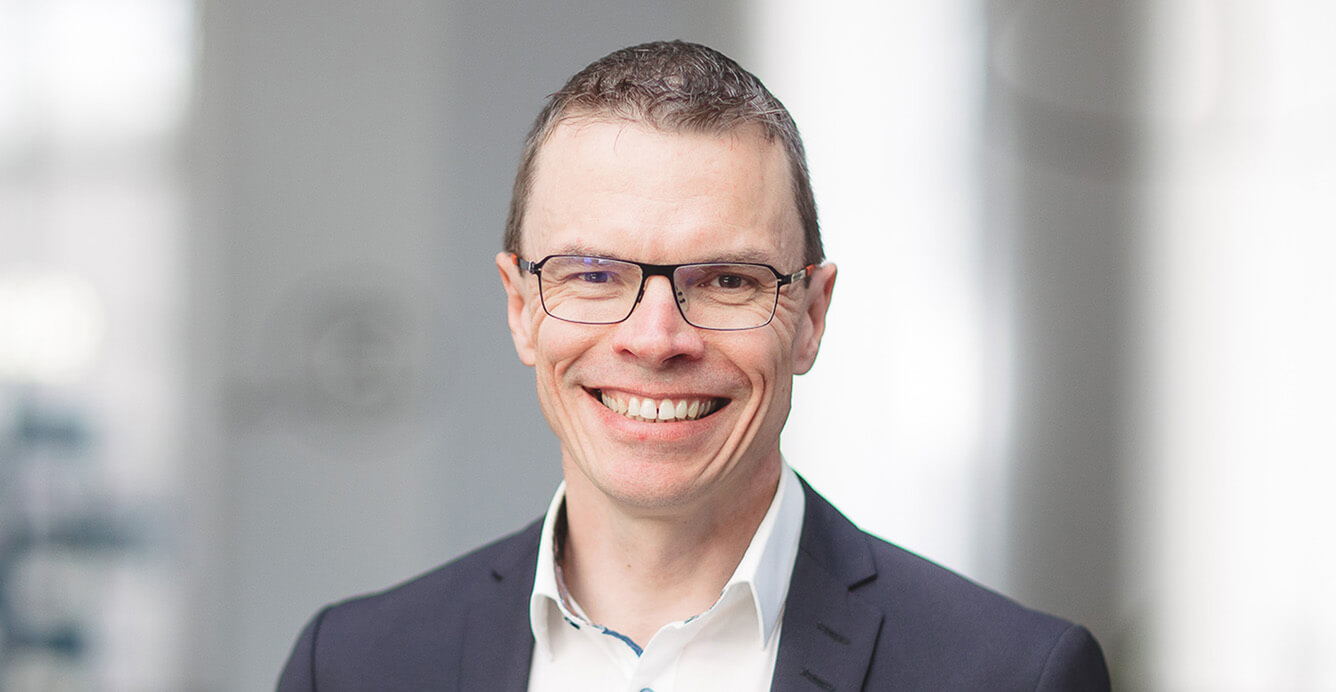
You spent years in cybersecurity before joining CUJO AI. What convinced you that protecting consumers through operators was the right approach?
Almost ten years ago, I was working at F-Secure when I noticed that some former colleagues were joining CUJO AI here in Finland. At the time, I didn’t pay much attention to it. A few years later, however, I was approached about joining the company myself. That’s when I started learning more about what CUJO AI was building and, in particular, about the backing it had from major operators like Comcast and Charter to provide cybersecurity services to millions of households.
That immediately resonated with me. Security was already an area that I felt strongly about, and the idea of delivering protection through operators seemed like a very powerful model. Operators are in a unique position because they can protect large numbers of people without requiring those people to become cybersecurity experts themselves. The fact that there were also talented people here whom I knew and respected from previous roles made the decision even easier. I’ve now been working as a Senior Product Manager focused on cybersecurity solutions since joining the company.
You've seen the industry from both sides—as an operator and now as a technology partner. What do people often misunderstand about how operators make decisions?
Every operator is different, but one thing they all have in common is scale. Some of the largest operators employ tens of thousands of people and run multiple business lines simultaneously. Internet connectivity may be one of their core services, but it’s often just one piece of a much larger organization.
I started my career at Telecom Finland, which later became Sonera and is now part of Telia. It was the leading operator in Finland at the time, and it gave me a firsthand look at how large telecom organizations operate. Today, at CUJO AI, we’re a company of roughly 250 people working with some of the largest operators in the world. The contrast is significant. We can move quickly, adapt quickly, and make decisions quickly. Large organizations have many priorities, many stakeholders, and many processes. Things often take longer.
When operators choose to invest in cybersecurity, they’re making a decision that can improve the online safety of millions of people.
At the same time, when those organizations decide to do something, the impact can be enormous. A single deployment can affect ten or fifteen million customers. That’s one of the things I find most motivating about this industry. When operators choose to invest in cybersecurity, they’re making a decision that can improve the online safety of millions of people.
What has also become increasingly interesting to me is how operators view cybersecurity. It is no longer just a technical feature. More operators see it as part of their value proposition. It’s a way to stand out in a market where everyone can offer similar speeds and similar pricing. Security helps create trust, and trust is something consumers value.
Why has trust become such an important part of the operator business?
At the end of the day, I think it comes down to responsibility. Consumers expect security from their operator. Whether they consciously think about it or not, they assume that the company providing their Internet connection is also helping keep them safe online.
Of course, technology is only part of the equation. Security solutions can block threats, prevent malicious connections, and reduce risk, but education still matters. People don’t need to become cybersecurity professionals to use the Internet safely, but they should understand basic online risks and know how to recognize suspicious situations. Operators have an important role to play here because they are often one of the few trusted technology brands that consumers interact with regularly.
What looks simple from the outside but is actually incredibly difficult for operators?
One challenge that doesn’t always get enough attention is the complexity of customer equipment. Operators may have five, six, or even seven generations of devices deployed in the field simultaneously. Some customers have the latest hardware, while others may still be using equipment that is many years old.
If customers aren’t actively complaining, replacing those devices is often difficult to justify. Likewise, consumers don’t always take advantage of upgrade opportunities even when they’re available. The result is that operators must continue supporting large numbers of legacy devices alongside the latest technology.
The situation is somewhat unfortunate because today’s devices are incredibly capable. Modern customer premises equipment can support advanced services, better security, and significantly improved experiences. The future of broadband technology is very exciting. The challenge is that replacing millions of devices is expensive, especially in highly competitive markets where operators must balance innovation with profitability.
When you look at the threat landscape today, what worries you the most?
If I had to choose one area, I would say scam protection. The threat landscape is changing rapidly, especially as cybercriminals adopt AI to make their attacks more convincing and more scalable.
Years ago, scam messages were often easy to spot. The language was poor, the messages looked suspicious, and many people recognized them immediately. Today, that’s no longer the case. Scams have become more polished, more personalized, and much easier to automate. Criminal organizations can target enormous numbers of people with very little effort.
We need to make it harder for criminal organizations to reach people in the first place.
What’s particularly concerning is that these attacks aren’t always about money. Romance scams, impersonation scams, sextortion, and other forms of emotional manipulation can have devastating effects on victims. In some cases, people lose not only their savings but also years of emotional well-being.
This is why I believe operators have an increasingly important role to play. We need to make it harder for criminal organizations to reach people in the first place and easier for consumers to stay protected.
You chose cybersecurity before most people even knew what cybersecurity was. What drew you to it?
I have to give some credit to my father. Back in the early 1990s, he told me that computers would be the future and encouraged me to pursue that path. At the time, I was already spending plenty of time around computers, playing games with friends, experimenting with programming, and simply being curious about technology.
Eventually, I studied computer science at Helsinki University of Technology, which had a relatively new department focused on computer networks and information security. There were several professors whose enthusiasm made a lasting impression on me. They spoke about networks, encryption, and the emerging Internet in a way that felt both exciting and important.
Looking back, it was a fascinating time to enter the field. The foundations of the Internet revolution were already visible, even if few people fully understood how transformative it would become. That’s when I decided to focus on networks and cybersecurity, and I’ve never really looked back.
After all these years in security, what still makes the work meaningful?
The Internet is one of the most valuable tools humanity has ever created. It gives people access to information, education, research, entertainment, and communities that would otherwise be impossible to reach. At the same time, it can also be a dangerous place.
For all the opportunities the Internet provides, there are also scams, phishing campaigns, and people looking to take advantage of others. To truly benefit from everything the Internet offers, people need to feel safe using it. That’s one of the reasons I became passionate about consumer cybersecurity.
We’re helping make the Internet safer so that people can focus on everything good it has to offer.
What continues to motivate me is the idea that our work has a tangible impact on people’s lives. I still remember trying to explain to my son what I do when he was six years old. The simplest way I could describe it was that we help fight the bad guys online. In many ways, that’s still true today. We’re helping make the Internet safer so that people can focus on everything good it has to offer.
You seem to enjoy challenges both professionally and personally. Where does that mindset come from?
I try to balance three things: work, family, and sports. For me, physical activity is important because it helps me clear my mind, maintain perspective, and recharge.
I’ve always been attracted to challenges that seem slightly unreasonable at first. I think goals should stretch you beyond what feels comfortable. Sometimes you succeed and sometimes you don’t, but that’s part of the process. The challenge itself is what makes the experience worthwhile.
I still remember preparing for my first marathon and genuinely questioning whether I would be able to finish it. Over time, I learned that if you’re willing to put in the work and remain patient, you can often accomplish much more than you initially believe. Since then, I’ve completed marathons, long-distance trail races, and a 70-kilometer trail run that took more than twelve hours.
What I enjoy most isn’t necessarily the distance. It’s the sense of exploration and challenge. Running in the mountains remains one of my favorite experiences because every route is different. A mountain marathon can take twice as long as a road marathon, but the scenery, the unpredictability, and the feeling of being outdoors make it worthwhile. I enjoy being challenged, whether that’s in sports, in work, or in life.