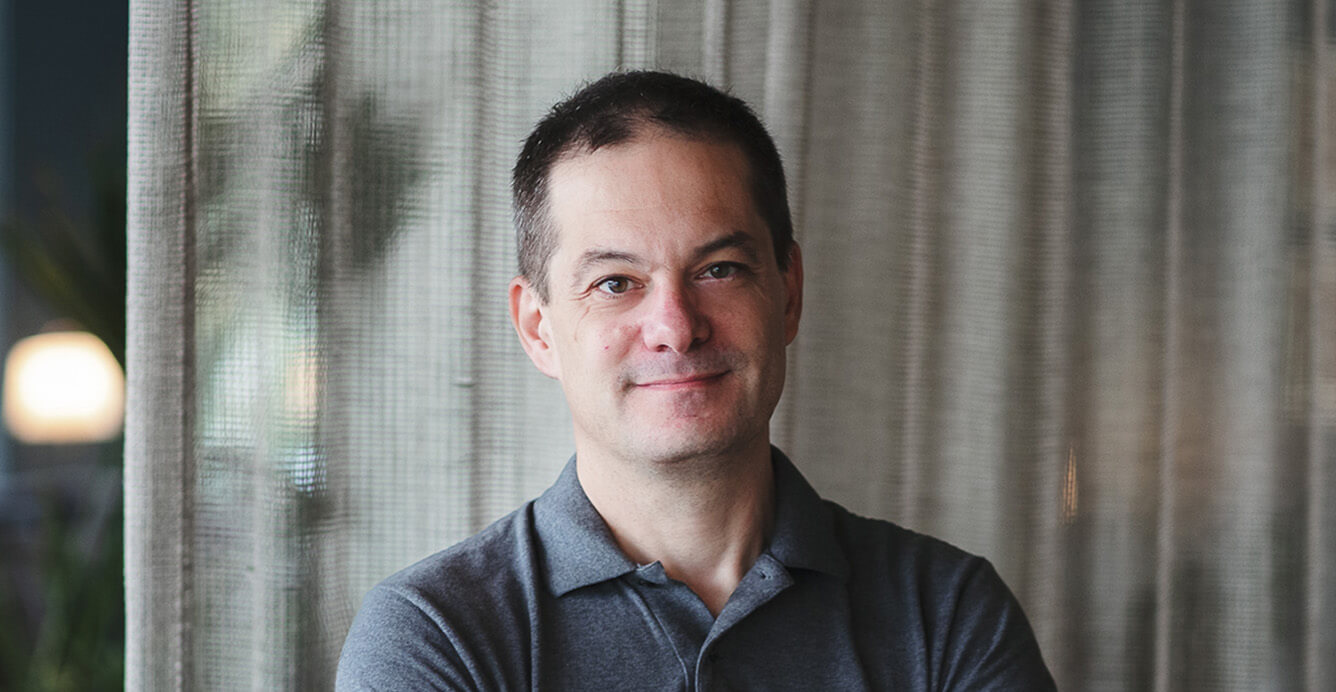
Andrea Soppera

There’s a moment before any telecom product goes live – before it appears in stores, in marketing campaigns, or on a customer’s screen – when everything must come together at once. Engineering, marketing, digital, operations, vendors. Different teams, different timelines, and different priorities. All moving in parallel, all needing to align. From the outside, it looks simple. From the inside, it rarely is.

Andrea Soppera spent more than two decades inside one of the world’s largest telecom operators, working across research, product, and customer experience. Over time, one thing became clear: the work isn’t just about building technology – it’s about making complexity work in practice.

In this conversation, he reflects on how that perspective shaped his path, and what it really takes to bring products to life inside that environment.

How did your journey into telecom begin - and what shaped the path you took?

I would say my journey really began when I was at university. That’s when I started thinking about how to build a career. I chose to study abroad and went to a telecom-focused school, and from there I was more or less set on working in this industry.

While I was still studying, I had the opportunity to do a placement with an operator, and that gave me my first real exposure. My first job after that was in the US, working on firmware and hardware for mobile networks.

After that first experience, I made a deliberate choice to move closer to where decisions were being made. I wanted to be in a position where I could shape outcomes and create products and roadmap, not just focus on operations. That led me to join the research department at British Telecom — and that’s really where my career started to take shape.

What drew you in during those early years - the technology itself, or the problems behind it?

It was always the problems. The beginning of my career was really about exploring challenges that operators were facing, from network capacity to quality of service. It was about listening to people, understanding their requirements, and trying to come up with solutions.

I worked closely with universities, and with smaller companies – companies similar in size to CUJO AI – that were bringing new ideas into the market to address these problems.

That mindset stayed with me throughout my career: always looking at what’s next, how we can make things better, and how we can make them better for the end customer.

How did that evolve as you moved closer to product and customer-facing roles?

Over time, my role shifted from focusing on internal problems to focusing more on customer-facing ones. Later in my career, I worked as a product manager. That was a different kind of challenge. Instead of solving problems inside the organization, I was listening directly to customers – understanding what they needed, what they didn’t like, and how we could improve their experience. In many ways, it was a continuation of what I had been doing before – just applied externally.

Everyone has a role to play, and your job is to bring all of that together.

You described product management as being “like directing an orchestra.” What does that mean in practice?

As a product manager in a telecom operator, you are not doing everything yourself – you are coordinating many different teams. You have engineering, marketing, digital, communications, events – and also vendors – just like CUJO AI. Everyone has a role to play, and your job is to bring all of that together.

So yes, it really feels like being the director of an orchestra. You need to make sure everyone is aligned, working toward the same goal, and delivering at the right time. But the real challenge isn’t just building products – it’s building them inside systems that don’t move quickly.

That’s especially true when launching a product. These launches can impact millions of people. They appear on TV, in stores, in marketing campaigns – and behind that, there is a lot happening to make it all come together.

What do people outside the industry often misunderstand about how telecom operators actually work?

I think many people underestimate the complexity. They have no idea that an operator is like a huge oil tanker – it doesn’t turn quickly. Even small changes can take time.

An operator is like a huge oil tanker — it doesn’t turn quickly.

That’s not because people aren’t capable. It’s because operators are large ecosystems, with many people, legacy systems, and processes that have been built over the years. Those systems are often optimized for specific ways of working and changing them takes time.

Even if two operators sell similar products, the way they operate can be very different – different cultures, different systems, different priorities. Complexity isn’t something you can remove – you have to learn to work with it. Understanding that is important if you want to work effectively with operators.

What separates a vendor from a true partner in that environment?

In a complex environment, relationships matter as much as technology. From my experience, the most successful relationships are the ones that evolve into partnerships. As an operator, what you want is not just someone selling you a product, but someone you can rely on. Someone you can call and say, “I have this problem – have you seen it before? Do you have ideas?” That level of trust makes a big difference.

What kind of problems do you personally enjoy solving the most?

The problems I enjoy most are the ones that have a visible impact on real people. When I can see that what I’m working on improves someone’s experience – makes something easier, more reliable, more secure – that’s what gives me the most satisfaction.

What has this industry given you, beyond a career?

For me, it’s the people. Over more than 20 years, I’ve met many colleagues who became friends. Even as roles change and people move across companies or countries, those relationships stay. Telecom really connects people – not just through networks, but also through the work itself. That’s something that stayed with me.

Telecom really connects people — not just through networks, but also through the work itself.

As you look ahead, what will matter most for operators in the coming years?

Operators are under pressure to become more efficient while continuing to innovate — and AI is at the center of that tension. The operators that will come ahead are the ones that treat AI not as an experiment, but as a core part of how they run their business. That takes time in large organizations. But more than time, it takes leadership and perseverance — and the right partners to make it real.

At the same time, customers expect reliability and quality. Operators need to deliver strong, consistent experiences while running leaner operations. That means working with partners who can support both efficiency and innovation – helping them deliver better products while keeping operations manageable.

If you step away from work - what do you enjoy doing most?

I enjoy traveling, and I really enjoy riding my motorbike. When I have time, I like going on long rides. Maybe to Italy, maybe further.

When you ride, you are very focused, very present. You meet people, you see places, but at the same time, it’s also time for yourself. There’s a sense of freedom in it – and that’s something I really value.