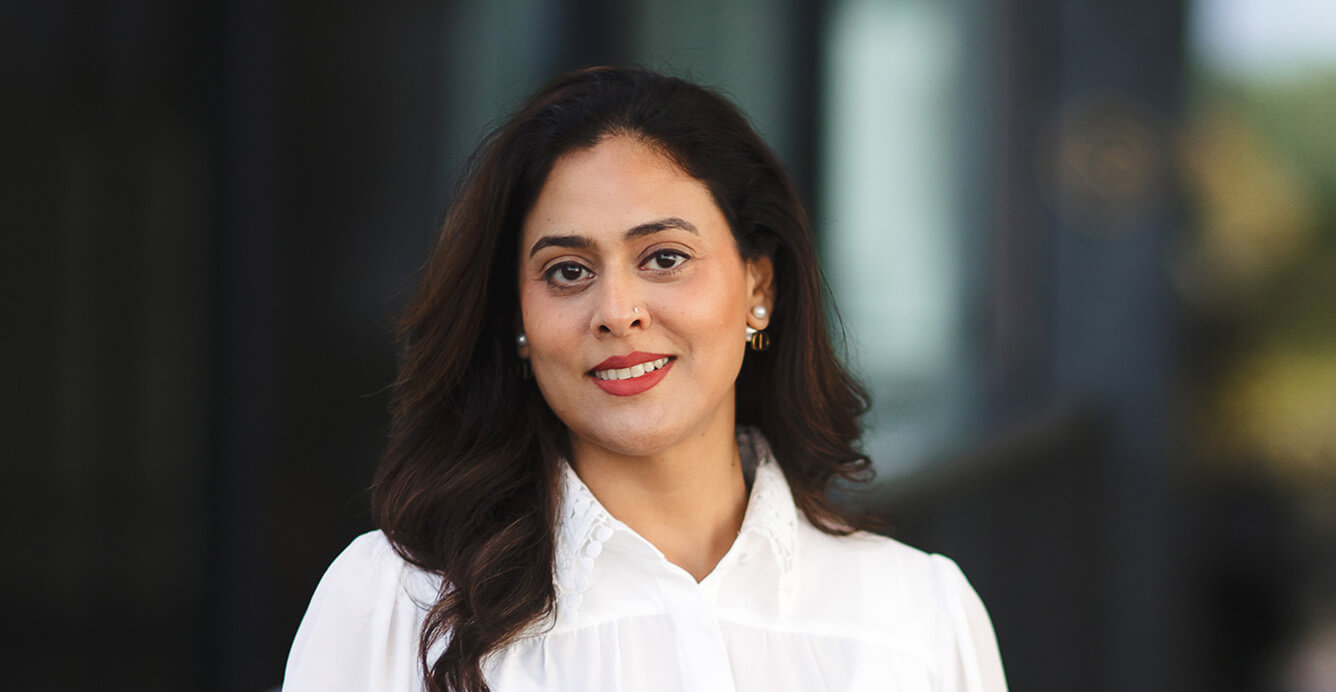
After years managing cybersecurity deployments at Rogers Communications, Amrita Singh thought she understood vendor relationships well. Then she joined CUJO AI and discovered just how much coordination, discussion, and collaboration happens behind the scenes.

Today, as a Senior Customer Delivery Manager, she works at the intersection of customers, product teams, and delivery teams spread across multiple countries and time zones. In this conversation, she reflects on what changed when she moved to the other side of the table — and why the strongest partnerships are the ones where both sides learn to walk at the same speed.

You spent years working inside a large telecommunications operator. What made you decide to join CUJO AI?

When I came to Canada, my first job was with Rogers Communications, where I worked as a project lead in the cybersecurity division managing deployments. At the time, I was the client rather than the vendor.

I got the opportunity to join CUJO AI through a former colleague, and I definitely had to weigh my options. It meant moving from a very large organization, where just the team I worked with was around 150 people, to a much smaller company. As I was thinking about it, I started reading more about CUJO AI, the technology, the research, and the amount of work that goes into the products. I found that really fascinating.

The role itself was also very interesting because it meant moving to the other side of the fence. Having spent years as a customer, I was curious to see what things looked like from the vendor’s perspective.

The ways of working were another big factor for me. Having children at home, being able to do meaningful work while still being there if my child needs me is probably one of the best things a working mom can ask for. It helped me create a much better balance in my life. Finally, I felt that having experience on both sides would give me a much more complete understanding of delivery.

What was the biggest thing you learned after moving to the vendor side?

I have so much more respect for vendors now. When I worked at an operator, it was easy to ask for something and say, “We need this tomorrow,” or “Can you get us an update by next week?” I didn’t always see everything happening in the background.

I now see how much hard work, discussion, and collaboration happen behind the scenes. It’s not like there is one person sitting somewhere with all the answers. Different teams need to get involved. Different people need to contribute. Sometimes there are multiple discussions happening before you can even go back to a customer with an answer.

I have so much more respect for vendors now. I didn’t always see everything happening in the background.

Working at CUJO AI also showed me how much coordination is required when teams are spread across different countries and time zones. I’m sitting in Canada, a customer may be in the US, and the delivery team may be in Europe. Everybody brings a different perspective and a different way of thinking. Somehow all of those pieces come together, and that’s something I didn’t fully appreciate when I was on the customer side.

What surprised you most about CUJO AI itself?

The culture. Honestly, it was such a refreshing change. On the operator side, it could sometimes be difficult to get answers. You would send an email, follow up, send another message, and wait.

Here, if I send somebody a message, I know I’m going to get a response. People genuinely want to help. Everybody is trying to make a difference and work toward a common goal.

I remember speaking to somebody who had recently joined CUJO AI and she said exactly the same thing. She was surprised by how everybody was in it together. Priorities might be different sometimes, but everyone is willing to support one another.

We’re spread across different countries and time zones, but we’re still a very close-knit team. If I have a problem, I know my team isn’t going to drop the ball. I trust them to take it forward with the customer and help solve it. That trust is incredibly important.

Has seeing both sides changed the way you think about customer-vendor relationships?

Absolutely. One thing I’ve learned is that we’re not just selling a product and then getting out of the relationship. We’re not retailers. We are partners.

A good partnership means both sides are working toward the same goal. If one side is moving at a certain speed, the other side has to move with them. If one side is way behind or way ahead, then something starts to break down.

Sometimes the challenges have nothing to do with the technology itself. A customer may be dealing with budget constraints, internal priorities, leadership changes, or other issues that we don’t always see from the outside. In those situations, our role is to provide as much information and support as possible so they can take that information back to leadership and build momentum internally.

At the end of the day, we want our customers to succeed. That’s the goal.

Which CUJO AI capabilities do you think operators should pay more attention to?

For me, Device Intelligence is one of the most important because it gives operators a much clearer picture of what is happening inside the customer’s home. That information helps them troubleshoot issues, improve customer experiences, and make better decisions.

The other one is parental controls. As a mom myself, I think parental controls are incredibly important. We all want some level of visibility and control over what our children can access online.

What surprises me is that I don’t see operators talking about it more. As a telecom customer myself, nobody has ever approached me and said, “We understand you’re a parent, and here’s something that might help.” I think there’s a real opportunity there.

And of course, coming from a cybersecurity background, I know how important security is as well. There are a lot of bad actors out there, and strong protection matters.

Telecom and technology have become more balanced over time, but that wasn't always the case. What helped you build your career?

When I started in the industry, there were situations where I was the only woman in the room. That could be intimidating, especially early on. What helped was learning to speak up and trust myself. Confidence comes with experience, but at some point, you have to decide that your opinion matters and that what you’re saying deserves to be heard.

Networking was also important. You have to build relationships. You have to make people understand that you mean business.

Looking back, I would tell my younger self to trust herself sooner. Speak up. Share your opinion. Don’t wait for somebody else to give you permission. What you have to say matters, and it can make a difference.

Tell us something your colleagues might be surprised to learn about you.

I’m actually a certified makeup artist. During the pandemic, I realized it was something that really interested me, and my husband encouraged me to learn it professionally. So, on weekends I went back to college, completed the certification, and became a certified makeup artist. It’s very different from telecom, but I love having something creative that’s completely separate from my day job.